
How this resource helps
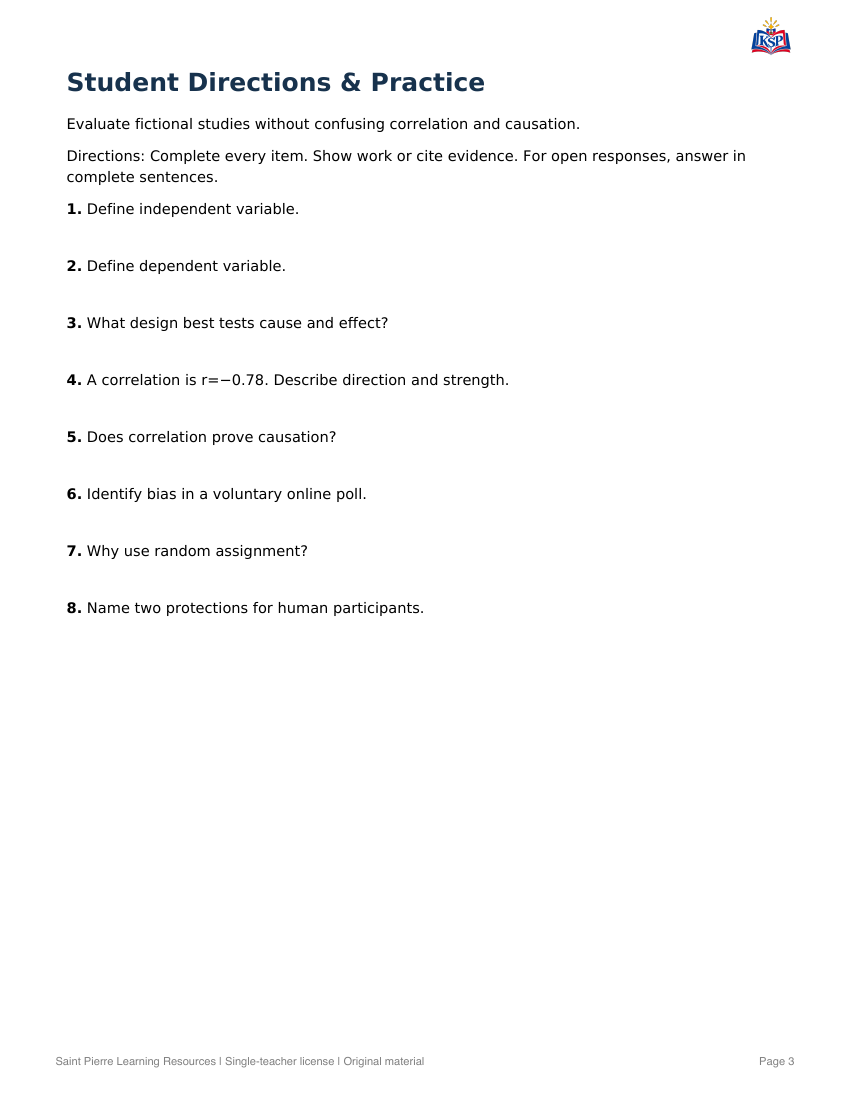
Intro Psychology: Research Methods & Ethics is a focused practice worksheet for introductory college psychology students. Students will: Distinguish between experimental, correlational, and descriptive research designs Identify independent and dependent variables, and potential sources of bias Interpret correlation data cautiously and avoid causation errors Apply core human-subject protections (informed consent, confidentiality, deception guidelines) Apply DOK-leveled reasoning from recall through extended analysis Pack includes: 8 guided and independent practice tasks (DOK 13) Teacher guide with notes Assessment / exit ticket Answer key with worked solutions and scoring rubric Differentiation notes for ELL, EC/Below-Level, AIG, and 504 students Perfect for: Intro Psychology, AP Psychology review, dual enrollment, test prep, and research literacy units. B&W friendly. Single-Teacher License. Grade: College Introductory Psychology.
What’s Included
- Teacher guide
- Eight guided and independent practice tasks
- Assessment / exit ticket
- Answer key with worked guidance
- Accessibility and differentiation notes
- Table of contents with standards at a glance
- Name and date lines on student pages
- Terms of use, credits, and thank-you pages
Inside the PDF
- Page 1Cover
- Page 2Teacher guide, model, and learning supports
- Page 3Eight practice tasks
- Page 4Two skill-specific exit tasks and reflection
- Page 5Answer key and next teaching steps
Resource details
- Grade / course
- College • Introductory Psychology
- Subject and resource type
- Psychology · Lesson and practice packet
- Files
- 8 main PDF pages · PDF
- Estimated completion time
- 45-60 minutes
- Answer key
- Separate answer key included. Contains: worked solutions for all 8 tasks, scoring rubric with DOK labels, formative data tips, class data snapshot table, and differentiation notes for ELL, EC/Below-Level, AIG, and 504 students. Labeled TEACHER USE ONLY.
Standard or objective
Course objective — Distinguish research designs, identify variables and bias, interpret correlation cautiously, and apply core human-subject protections.
Course-level objective; no accreditation or universal equivalency claimed.