

How this resource helps
Teach students to connect tiled rectangles with multiplication and addition through visual models, partner practice, independent work, and later review. This Grade 3 resource focuses on a selected part of NC.3.MD.7; it is not a complete grade curriculum or a simulated EOG. The 80-minute core route is 8 + 12 + 15 + 20 + 20 + 5 minutes. Five separate warm-ups take about five minutes each; seasonal sets are later revisits.
What’s Included
- 1 ZIP with the complete 52-page teaching PDF (48 printable teaching pages), 10-slide editable PPTX, and 10-page PDF slide handout
- 2 worked models and a visual area-array anchor chart
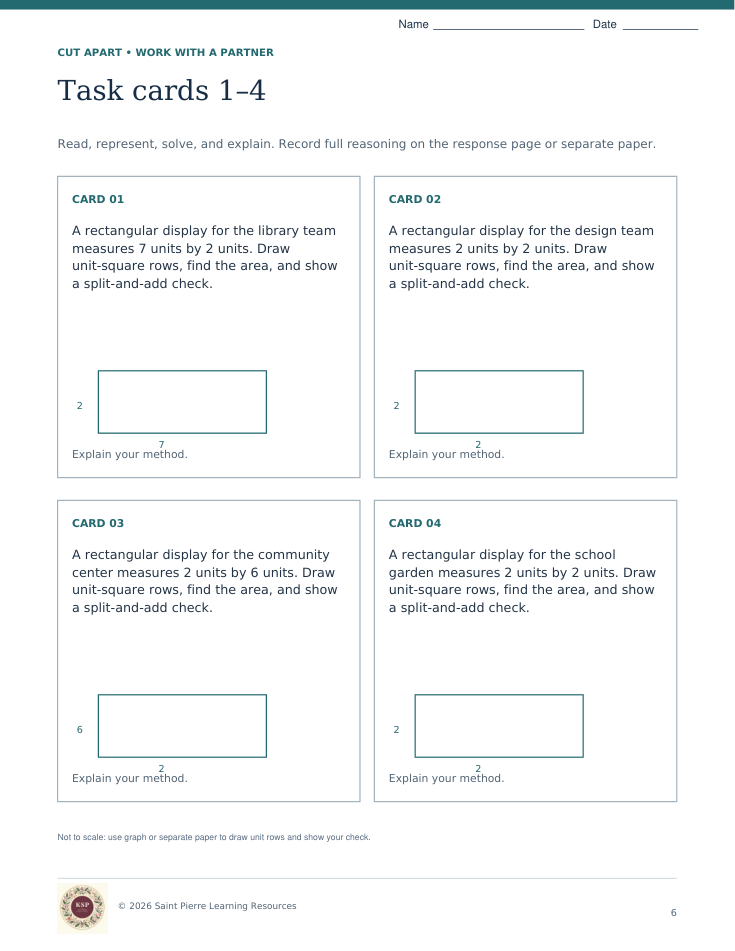
- 16 cut-apart task cards plus 1 response record
- 5 two-question warm-ups (10 items; about five minutes each)
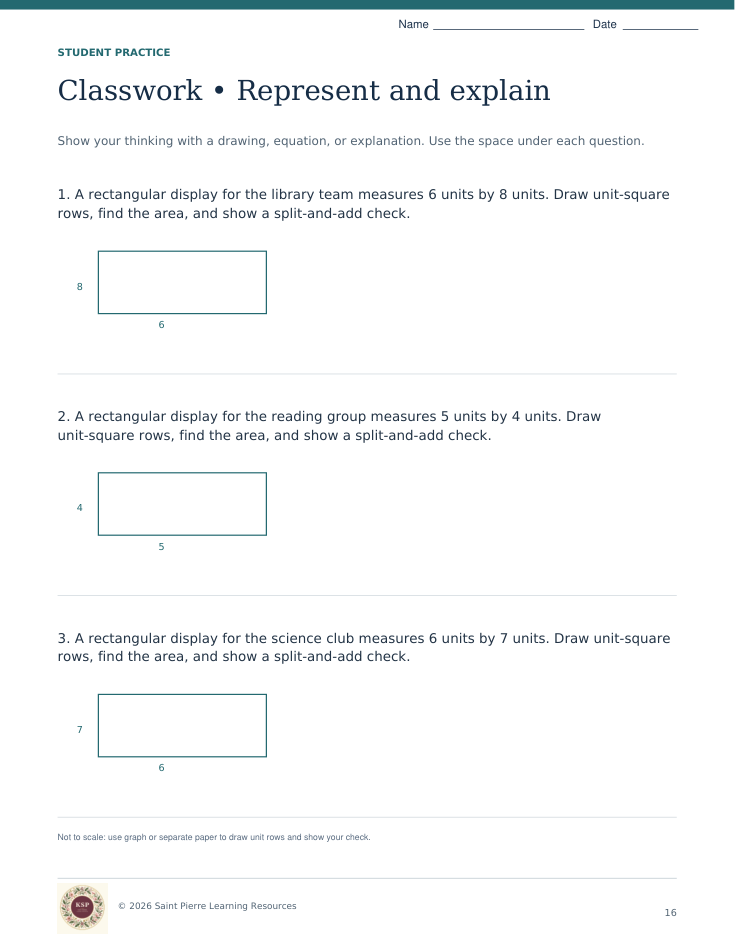
- 6 classwork questions and 1 four-question exit ticket with local scoring guidance
- 4 seasonal sets: fall, winter, spring break, and summer (8 questions each; 32 total)
- 1 planned-absence substitute lesson plus 4 practice questions
- 1 emergency substitute lesson plus 4 practice questions and a no-copier option
- 1 completed lesson-plan example and 1 reusable blank planning page
- Worked solutions for all 76 student practice and assessment items
- AIG, 504, EC, and ESL support guidance; standards/source notes; single-teacher license
- KSP botanical branding on the cover and student pages; answer keys are labeled for separate printing
Resource details
- Grade / course
- Grade 3 • North Carolina
- State / alignment scope
- North Carolina
- Subject and resource type
- Mathematics · Complete mathematics teaching bundle
- Files
- 52 main PDF pages + 10 slide-handout pages · 10 editable slides · PDF + Editable PPTX + PDF slide handout + ZIP in one ZIP download
- Estimated completion time
- 80-minute core lesson route (8 + 12 + 15 + 20 + 20 + 5 minutes). Five separate warm-ups take about 5 minutes each. Seasonal sets are 15–20-minute revisits; planned and emergency substitute lessons are 45 minutes.
- Answer key
- Worked solutions for all 76 printable student items, two worked models, teacher-review answers for the slide deck’s selected practice and exit ticket, and a local 0–2 item rubric. No standardized score prediction.
Standard or objective
NC.3.MD.7
Connect tiled rectangles with multiplication.
Sources checked 2026-10-07.
Learner directions
Read the quantities, draw unit-square rows, find the area, and show a split-and-add check. Use graph or separate paper for a clear model; task-card work may go on the response page.
Teaching suggestions
Model first, use cards in pairs, assign classwork independently, and use the exit explanation to choose a reteaching step. Keep the teacher-review slide hidden during independent work.